THaW welcomes Vanderbilt


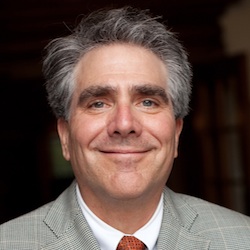
portrait of Eric Johnson

Professor M. Eric Johnson, Dean of the Owen School of Management at Vanderbilt University

Vanderbilt University‘s Owen School of Management is now part of the Trustworthy Health and Wellness research team. Eric Johnson is one of our earliest collaborators and co-authored the NSF SaTC proposal; until recently he was a professor at Dartmouth’s Tuck School of Business. Last month, he joined Vanderbilt as Dean of the Owen School of Management. We are pleased that Eric will be able to continue his collaboration on THaW from Vanderbilt. He brings a great deal of experience in the economics and business of healthcare information technology, from his prior work in the Trustworthy Information Systems for Healthcare (TISH) project, Securing Information Technology in Healthcare (SITH) workshops, and other ISTS and I3P projects related to security and privacy in healthcare information technology. Read more about Eric, and his research, at his home page.

Our interdisciplinary team

The scale and scope of this problem space requires an interdisciplinary team with expertise in both computer security and healthcare information technology. We assembled an outstanding multi-disciplinary team from four universities (Dartmouth College, Johns Hopkins University, University of Illinois, and University of Michigan), comprised of senior researchers with deep expertise in security, mobile computing, cloud computing, and the application of these technologies to healthcare. Our team includes professors of computer science, business, health policy, and behavioral health, as well as the CISO of a major hospital and a leading cybersecurity research leader now at GWU. The four site PIs are, alphabetically,

  • Kevin Fu (UM): Associate Professor of Electrical Engineering and Computer Science, member of the NIST Information Security and Privacy Advisory Board, ORISE Fellow at the FDA, and director of the Ann Arbor Research Center for Medical Device Security (Archimedes).
  • Carl Gunter (UIUC): Professor of Computer Science, Professor in the College of Medicine, Director of the Illinois Security Lab and the Health Information Technology Center, and PI of the HHS-ONC funded Strategic Healthcare IT Advanced Research Projects on Security (SHARPS).
  • David Kotz (Dartmouth): Professor of Computer Science, PI of the NSF-funded Trustworthy Information Systems for Healthcare (TISH) project, and former director of the Institute for Security, Technology, and Society (ISTS).
  • Avi Rubin (JHU): Professor of Computer Science, Technical Director of the Information Security Institute, and PI of one of the first NSF CyberTrust centers (on e-voting).

Rounding out the team are a broad group of faculty with deep expertise:

  • Michael Bailey (UM): Research Associate Professor of Electrical Engineering and Computer Science, with expertise in availability and security of complex distributed systems.
  • Roy Campbell (UIUC): Professor of Computer Science, with expertise in security, cloud computing, and ubiquitous computing.
  • Steve Checkoway (JHU): Research Assistant Professor of Computer Science, with expertise in embedded systems security.
  • Eric Johnson (Vanderbilt): Dean of the Owen School of Management, and author of the book The Economics of Financial and Medical Identity Theft.
  • Darren Lacey (JHU): Chief Information Security Officer and Director of IT Compliance for the Johns Hopkins University and Johns Hopkins Medicine.
  • Carl Landwehr (GWU): Lead Research Scientist at the Cyber Security Policy and Research Institute (George Washington University), and previously managed cybersecurity research programs at NSF, IARPA, and DARPA.
  • Lisa Marsch (Dartmouth): Director of the NIH-funded Center for Technology and Behavioral Health and on the faculty of the Department of Psychiatry.
  • Klara Nahrstedt (UIUC): Professor of Computer Science, with expertise in security, cloud computing, and multimedia.
  • Jonathan Weiner (JHU): Professor of health policy and management at Bloomberg School of Public Health, Professor of Health Informatics, and Director of the Center for Population Health IT (CPHIT).
Our mission

Welcome to the Trustworthy Health and Wellness (THaW) project. Our mission is to enable the promise of health and wellness technology by innovating mobile- and cloud-computing systems that respect the privacy of individuals and the trustworthiness of medical information.

With this mission in mind, our team is launching a comprehensive, multi-disciplinary research agenda to address many of the fundamental technical problems that arise in securing healthcare infrastructure that, given recent trends, will increasingly be delivered using mobile devices and cloud-based services. The pervasive reach and (often) health-critical nature of these new technologies demand scientific solutions that provide trustworthy cybersystems for health and wellness. Our five-year research agenda is driven by the needs of the changing health & wellness ecosystem and addresses fundamental scientific problems that arise in other domains in transition to an infrastructure built on mobile devices and cloud services, such as transportation, m-commerce and education.

Specifically, our research agenda will contribute to authenticating mobile users in a continuous and unobtrusive way, segmenting access to medical records from mobile devices to limit information exposure, allowing individuals a usable way to control the information collected about them, handling genomic data in the cloud while enabling patient control over information, managing security on remote health devices while reducing the burden on the user, verifying medical directives issued to remote devices, detecting malware through power analysis, providing provenance information to those who use health data, and auditing behavior of this complex ecosystem of devices and systems.

Our research will have long-term impact by enabling the creation of health & wellness systems that can be trusted by individual citizens to protect their privacy and can be trusted by health professionals to ensure data integrity and security. Our healthcare partners will aid us to evaluate and demonstrate the value of our security solutions. We will also impact the next generation of scientists by creating new course modules, sponsoring summer programs for underrepresented minorities and women to broaden undergraduate and K-12 participation in computing; and creating an exchange program for our postdocs and research students to rotate among sites to broaden perspectives and receive mentoring on trustworthy computing.