Unknown's avatar

About David Kotz

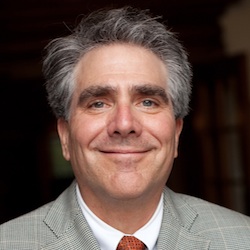
David Kotz is the Provost, the Pat and John Rosenwald Professor in the Department of Computer Science, and the Director of Emerging Technologies and Data Analytics in the Center for Technology and Behavioral Health, all at Dartmouth College. He previously served as Associate Dean of the Faculty for the Sciences and as the Executive Director of the Institute for Security Technology Studies. His research interests include security and privacy in smart homes, pervasive computing for healthcare, and wireless networks. He has published over 240 refereed papers, obtained $89m in grant funding, and mentored nearly 100 research students. He is an ACM Fellow, an IEEE Fellow, a 2008 Fulbright Fellow to India, a 2019 Visiting Professor at ETH Zürich, and an elected member of Phi Beta Kappa. He received his AB in Computer Science and Physics from Dartmouth in 1986, and his PhD in Computer Science from Duke University in 1991.

SoK: Security and Privacy in Implantable Medical Devices and Body Area Networks

The THaW team is pleased to announce the first of its three papers to be presented at the IEEE Symposium on Security & Privacy (aka ‘Oakland’) in May.

SoK: Security and Privacy in Implantable Medical Devices and Body Area Networks
Michael Rushanan, Aviel D. Rubin, Denis Foo Kune, Colleen M. Swanson

Abstract: Balancing security, privacy, safety, and utility is a necessity in the health care domain, in which implantable medical devices (IMDs) and body area networks (BANs) have made it possible to continuously and automatically manage and treat a number of health conditions, ranging from cardiac arrhythmia to Parkinson’s disease. In this work, we provide a clear definition and overview of the problem space, categorizing relevant research results in academia with respect to threats and identifying trends and directions for future research. We identify three broad research categories aimed at ensuring the security and privacy of the telemetry interface, software, and physiological sensing interface layers. We find that while the security of the telemetry interface has received much attention in academia, both the threat of software exploitation and the sensor interface layer deserve further attention.

[view pdf]

Postdoc position available

Professor David Kotz is looking for a sharp graduate to join his team at Dartmouth as a postdoc in summer 2014.

Dartmouth shield logoThe postdoc will be involved in his research on security & privacy for healthcare information systems; in particular, his group is working on secure methods for use of mobile computing and wearable sensors in the context of healthcare (mHealth). As such, the postdoc would join an inter-disciplinary team working on multiple funded projects, primarily Amulet with some involvement in the Trustworthy Health & Wellness (THaW) project. The team collaborates with colleagues in the engineering and medical schools, and with several other universities.

Continue reading

Kevin Fu – one of “Five MedTech Influencers You Should Know“

This week, MDDI News profiled THaW PI Kevin Fu as one of its “Five MedTech Influencers You Should Know“, and included this University of Michigan video about his lab’s work.

Hospitals Must Develop IT Security Plans To Avoid Target’s Fate

In a recent study examining data from 243 hospitals, THaW researcher Eric Johnson found that while compliance with state and federal IT security mandates like HIPAA helps the worst hospitals protect patient information better, organizations that maintain and regularly update a security plan get far more from their security investments. Eric defines these organizations as “operationally mature.” These strategic plans — along with periodic reviews — enable organizations to learn of potential new risks and evaluate their own security posture. As a consequence, organizations’ security resources are better targeted to address their specific needs and the environments in which they operate. Eric’s results show that the impact of security investments varies depending on the operational maturity of the organization.

Read more about this study and its results in Eric’s blog. The study was funded by an earlier NSF grant on Trustworthy Information Systems for Healthcare.

THaW kick-off meeting

THaW participants (and a few invited guests) at Johns Hopkins University, December 2013

THaW participants (and a few invited guests) at Johns Hopkins University, December 2013

The THaW research group held its first all-hands meeting at the Johns Hopkins University on December 11, 2013. About thirty researchers from five universities and affiliated medical centers were in attendance, along with several experts from the field of healthcare information technology. It was a great opportunity for the team to build rapport and begin collaborative projects.  Many thanks to Avi Rubin and Wendy Phillips and their team for hosting us.

Amulet project launched

We are pleased to announce that NSF CNS has awarded three years of funding for the Computational Jewelry for Mobile Health project, which complements many of the projects in the Trustworthy Health and Wellness program and involves several of the same Dartmouth researchers.

The project’s vision is that computational jewelry, in a form like a bracelet or pendant, will provide the properties essential for successful body-area mHealth networks. These devices coordinate the activity of the body-area network and provide a discreet means for communicating with their wearer. Such devices complement the capabilities of a smartphone, bridging the gap between the type of pervasive computing possible with a mobile phone and that enabled by wearable computing.

The interdisciplinary team of investigators from Dartmouth and Clemson is designing and developing ‘Amulet’, an electronic bracelet and a software framework that enables developers to create (and users to easily use) safe, secure, and efficient mHealth applications that fit seamlessly into everyday life. The research is determining the degree to which computational jewelry offers advantages in availability, reliability, security, privacy, and usability, and developing techniques that provide these properties in spite of the severely-constrained power resources of wearable jewelry.

Learn more about the Amulet project at amulet-project.org.

THaW welcomes Vanderbilt


portrait of Eric Johnson

Professor M. Eric Johnson, Dean of the Owen School of Management at Vanderbilt University

Vanderbilt University‘s Owen School of Management is now part of the Trustworthy Health and Wellness research team. Eric Johnson is one of our earliest collaborators and co-authored the NSF SaTC proposal; until recently he was a professor at Dartmouth’s Tuck School of Business. Last month, he joined Vanderbilt as Dean of the Owen School of Management. We are pleased that Eric will be able to continue his collaboration on THaW from Vanderbilt. He brings a great deal of experience in the economics and business of healthcare information technology, from his prior work in the Trustworthy Information Systems for Healthcare (TISH) project, Securing Information Technology in Healthcare (SITH) workshops, and other ISTS and I3P projects related to security and privacy in healthcare information technology. Read more about Eric, and his research, at his home page.

Five trends in healthcare IT – and their implications for security

In the previous post we described the current landscape for healthcare information technology. In this post, we note how healthcare information systems increasingly face daunting security challenges due to five economic and technological trends. First, the locus of care is shifting, as the healthcare system seeks more efficient and less-expensive ways to care for patients, particularly outpatients with chronic conditions. Second, strong economic incentives are pushing health providers to innovate by rewarding providers for keeping their patient population healthy, rather than paying only to fix patients when they are ill. Third, the treatment of chronic conditions and the implementation of prevention plans entail more continuous patient monitoring, outside of the clinical setting. Fourth, mobile consumer devices (smartphones and tablets) are quickly being adopted for health & wellness applications, both by caregivers and patients, in addition to their many other uses – making it difficult to protect sensitive health-related data and functions from the risks posed by a general-purpose Internet device. Finally, significant emerging threats are targeting healthcare information systems, while new regulations strive to protect medical integrity and patient privacy. Let’s look at each of these five trends in more detail.

Continue reading

The healthcare IT landscape

The United States spends over $2.6 trillion annually on healthcare. This amount represents approximately 18% of the gross domestic product (GDP), a percentage that has doubled in the last 30 years and is the highest of any country in the world [11]. Over 75% of these costs are due to the management of chronic diseases, which currently affects 45% of the U.S. population. By 2023, it is expected that costs to manage chronic diseases alone will rise to $4.2 trillion [3]. Many look to information technology to help reduce costs, increase efficiency, broaden access to healthcare, and improve the health of the population.

Meanwhile, recent years have seen a dramatic shift in the nature of computing with the advent of smartphones and tablet computers; the latest surveys estimate that over 50% of Americans have smartphones [10]. This wide-spread availability of a powerful mobile computing platform, with a rich interface and a variety of built-in sensors, has created a boom in mobile health (mHealth) applications like RunKeeper and Fooducate [9]; mHealth application downloads increased from 124 million in 2011 to 247 million in 2012 [8]. These mHealth apps and devices are becoming more prevalent due in part to the rising cost of healthcare and their suitability for managing chronic diseases, particularly in the aging population [5, 6], and in prevention and wellness programs [1].

Smartphones and tablets are rapidly moving into the clinical workplace as well. A recent estimate indicates that as many as 62% of doctors use mobile tablets [4]. Although some hospitals embrace smartphones and tablets by distributing them to their staff [7], a 2012 survey found that 85% of hospitals allow their clinicians to bring their own device to work [2].

Furthermore, universal connectivity (cellular, wireless, and home broadband) has enabled a tremendous variety of services to move to the “cloud.” Services like Dropbox and Google Drive make it easy for individuals to store, manipulate, and share content on cloud servers located in distant data centers. Services like Amazon S3 and Google App Engine make it easy for developers to build scalable computational backends without installing or managing their own infrastructure. These trends are pushing more individuals and enterprises to push an increasing fraction of their computing into Internet-connected servers run by other organizations – raising important questions about security and privacy.

Finally, recent years have seen rapid developments in smart, miniaturized, low-power, adaptive and self-calibrating instrumentation, enabling the emergence of mobile devices for monitoring and managing individual health conditions; examples range from wearable devices that measure physical activity (such as the BodyMedia armband) to Wi-Fi enabled bathroom scales (such as those from Withings or Fitbit) to stick-on ECG patches to monitor heart conditions (such as those from Corventis) to implanted insulin pumps (such as one from Medtronic). Most are wireless, able to upload data to a smartphone or to a cloud server for analysis and access by both the individual and caregivers.

The dynamic healthcare ecosystem and rapid technology evolution lead to new challenges in securing tomorrow’s healthcare information infrastructure. More on that in the next post!

Continue reading

Our interdisciplinary team

The scale and scope of this problem space requires an interdisciplinary team with expertise in both computer security and healthcare information technology. We assembled an outstanding multi-disciplinary team from four universities (Dartmouth College, Johns Hopkins University, University of Illinois, and University of Michigan), comprised of senior researchers with deep expertise in security, mobile computing, cloud computing, and the application of these technologies to healthcare. Our team includes professors of computer science, business, health policy, and behavioral health, as well as the CISO of a major hospital and a leading cybersecurity research leader now at GWU. The four site PIs are, alphabetically,

  • Kevin Fu (UM): Associate Professor of Electrical Engineering and Computer Science, member of the NIST Information Security and Privacy Advisory Board, ORISE Fellow at the FDA, and director of the Ann Arbor Research Center for Medical Device Security (Archimedes).
  • Carl Gunter (UIUC): Professor of Computer Science, Professor in the College of Medicine, Director of the Illinois Security Lab and the Health Information Technology Center, and PI of the HHS-ONC funded Strategic Healthcare IT Advanced Research Projects on Security (SHARPS).
  • David Kotz (Dartmouth): Professor of Computer Science, PI of the NSF-funded Trustworthy Information Systems for Healthcare (TISH) project, and former director of the Institute for Security, Technology, and Society (ISTS).
  • Avi Rubin (JHU): Professor of Computer Science, Technical Director of the Information Security Institute, and PI of one of the first NSF CyberTrust centers (on e-voting).

Rounding out the team are a broad group of faculty with deep expertise:

  • Michael Bailey (UM): Research Associate Professor of Electrical Engineering and Computer Science, with expertise in availability and security of complex distributed systems.
  • Roy Campbell (UIUC): Professor of Computer Science, with expertise in security, cloud computing, and ubiquitous computing.
  • Steve Checkoway (JHU): Research Assistant Professor of Computer Science, with expertise in embedded systems security.
  • Eric Johnson (Vanderbilt): Dean of the Owen School of Management, and author of the book The Economics of Financial and Medical Identity Theft.
  • Darren Lacey (JHU): Chief Information Security Officer and Director of IT Compliance for the Johns Hopkins University and Johns Hopkins Medicine.
  • Carl Landwehr (GWU): Lead Research Scientist at the Cyber Security Policy and Research Institute (George Washington University), and previously managed cybersecurity research programs at NSF, IARPA, and DARPA.
  • Lisa Marsch (Dartmouth): Director of the NIH-funded Center for Technology and Behavioral Health and on the faculty of the Department of Psychiatry.
  • Klara Nahrstedt (UIUC): Professor of Computer Science, with expertise in security, cloud computing, and multimedia.
  • Jonathan Weiner (JHU): Professor of health policy and management at Bloomberg School of Public Health, Professor of Health Informatics, and Director of the Center for Population Health IT (CPHIT).