
An IoT device user with a blood-pressure monitoring device should have the assurance that the device operates how a blood-pressure monitor should operate. If the monitor is connected to a measurement app that collects, stores, and reports data, but interacts in a way that is inconsistent with typical interactions for this type of device, there may be cause for concern. The reality of ubiquitous connectivity and frequent mobility gives rise to a myriad of opportunities for devices to be compromised. Thus, we argue that one-time, single-factor, device-to-device authentication (i.e., an initial pairing) is not enough, and that there must exist some mechanism to frequently (re-)verify the authenticity of devices and their connections.
In this paper we propose a device-to-device recurring authentication scheme – Verification of Interaction Authenticity (VIA) – that is based on evaluating characteristics of the communications (interactions) between devices. We adapt techniques from wireless traffic analysis and intrusion detection systems to develop behavioral models that capture typical, authentic device interactions (behavior); these models enable recurring verification of device behavior.
To read more, check out the paper here.


Travis Peters, Timothy J. Pierson, Sougata Sen, José Camacho, and David Kotz. Recurring Verification of Interaction Authenticity Within Bluetooth Networks. Proceedings of the ACM Conference on Security and Privacy in Wireless and Mobile Networks (WiSec 2021), pages 192–203. ACM, June 2021. doi:10.1145/3448300.3468287. ©
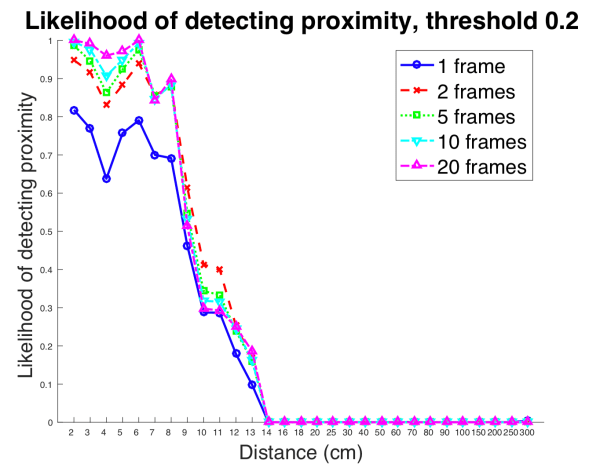 Abstract: Providing secure communications between wireless devices that encounter each other on an ad-hoc basis is a challenge that has not yet been fully addressed. In these cases, close physical proximity among devices that have never shared a secret key is sometimes used as a basis of trust; devices in close proximity are deemed trustworthy while more distant devices are viewed as potential adversaries. Because radio waves are invisible, however, a user may believe a wireless device is communicating with a nearby device when in fact the user’s device is communicating with a distant adversary. Researchers have previously proposed methods for multi-antenna devices to ascertain physical proximity with other devices, but devices with a single antenna, such as those commonly used in the Internet of Things, cannot take advantage of these techniques.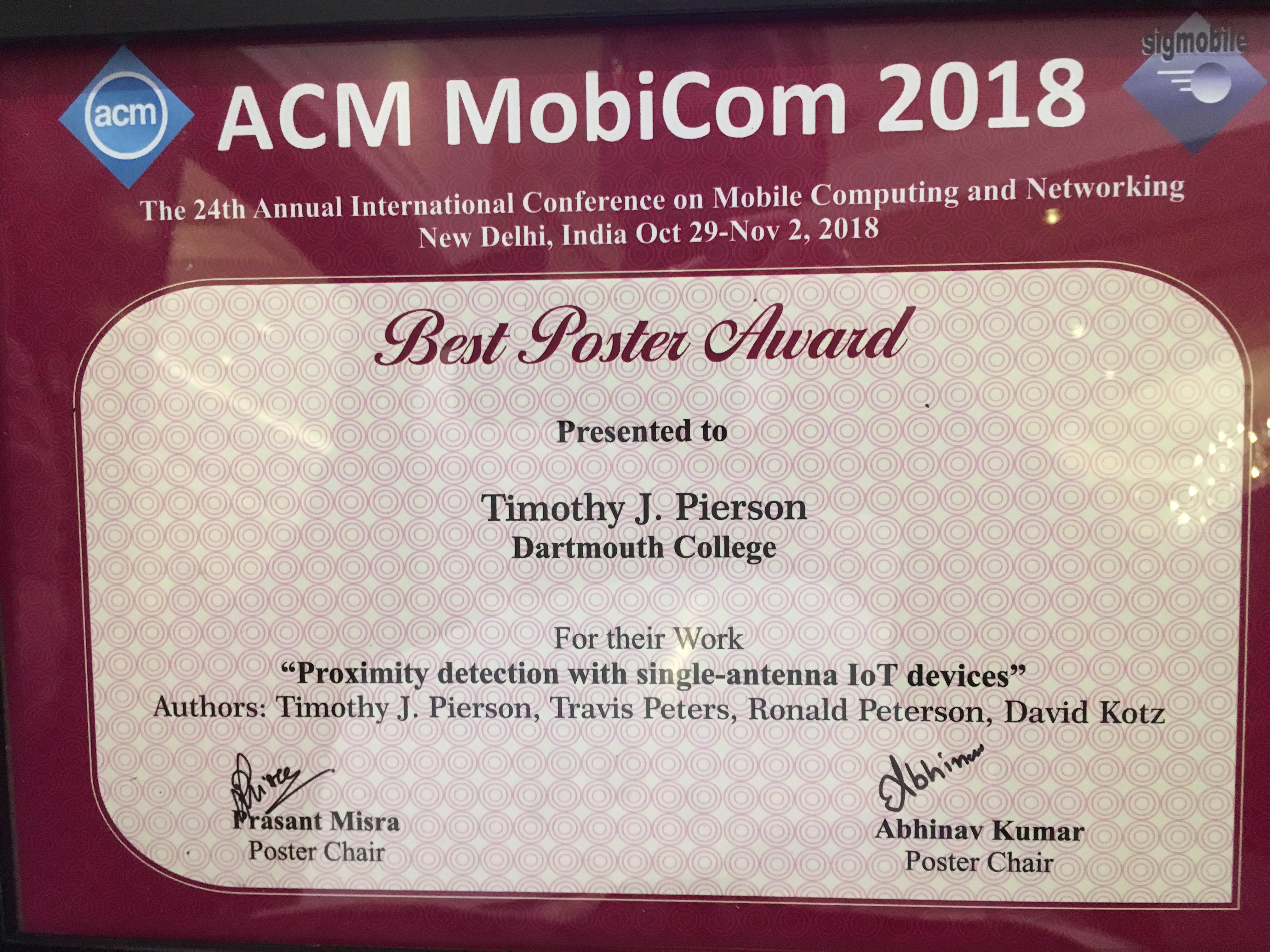
 Trustworthy Health and Wellness